
Hong Kong companies introduce hybrid minibuses to shake up BYD

Save 40% of fuel consumption
As for the layout of the car, it is the same as the tour buses seen in the general market. The car can accommodate up to 49 passengers, but the biggest difference is that the driver's seat will have more battery switch options, allowing the driver to use it according to driving needs. As for other specifications of the body, the transmission system is a single-speed automatic transmission, with a maximum horsepower of 240kW and a maximum torque of 3,800Nm. The braking system is equipped with front and rear disc type plus ABS anti-lock brake system, and a dual-loop all-wind EBS electronic brake module. Compared with similar coaches, this hybrid oil-electric drive model can save 40% or more of fuel consumption and reduce emissions by up to 70% or more.
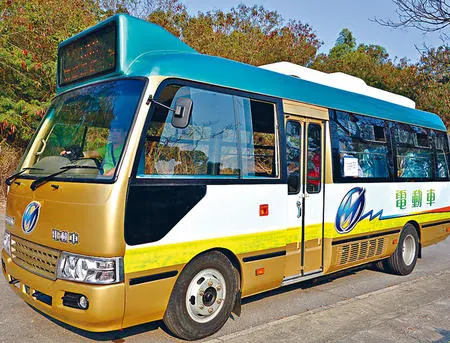
(Comprehensive Report) (Sing Tao Daily Report) Although Hong Kong's industry has long moved northward, environmentally friendly hybrid vehicle technology has sprouted in Hong Kong. It has become a stage for mainland automakers to develop environmentally friendly vehicles and introduce electric and hybrid taxis and buses in Hong Kong. The Hong Kong company GMI uses Dongfeng (489) minibus body and foreign imported power system to assemble hybrid minibuses in Hong Kong. It has been purchased by three minibus companies, including Jinzhi Bus (077). GMI also plans to produce all-electric single-decker buses to compete for orders from patented bus companies with powerful mainland factories such as BYD (1211). Lu Zhipei, managing director of GMI, said in an interview with this newspaper that the hybrid minibus assembled by the company has been piloted on the road and is currently being tested by government departments. If everything goes well, it is expected to be officially put into service in July and August this year. In addition to Jinzhi Bus, Mayamu's companies, the "King of Minibuses", and Jiehui, which operates the Hung Hom bus, have purchased minibuses from GMI. There are 12 hybrid minibuses delivered in a short period of time. The government provides subsidies to companies that purchase hybrid minibuses, the amount is equivalent to the difference between the price of hybrid minibuses and traditional minibuses. However, Lu Zhipei emphasized that even without government funding, there are still economic benefits for minibus companies to purchase hybrid vehicles. In the early days of its launch, the price of hybrid minibuses exceeded 1 million yuan, but as long as GMI increased production, the price of hybrid minibuses could be reduced to less than 1 million yuan, compared with the price of traditional diesel minibuses of more than 600,000 yuan, a difference of 200,000 to 300,000 yuan; however, the fuel consumption of hybrid minibuses is only diesel minibuses.It is estimated that after the hybrid minibus has been in operation for more than two years, the fuel money saved will be equivalent to the difference in the price of the car, and then it will continue to save money for the owner. In addition, the government plans to fully subsidize five patented bus companies (KMB, Citybus, New Bus, Longyun, Lantau Bus) to purchase a total of 36 all-electric single-decker buses. Lu Chi-pei said that GMI is also interested in bidding for relevant contracts, but the government has not yet announced the details and timetable of the plan. In Hong Kong's hybrid minibus market, GMI is the only supplier, but in terms of electric buses, it has to face competition from mainland automakers. It is reported that BYD, Wuzhoulong, Huaxia Shenlong, etc. are all interested in competing for the above-mentioned contracts. Facing the current strong enemy, GMI naturally cannot afford to lose. The low-platform, 12-meter electric buses that GMI plans to produce also use Dongfeng's body and chassis, as well as motors and battery modules purchased from foreign countries. Lu Chi-pei said that modern electric bus technology is sufficient to cope with the complex and sloping road environment in Hong Kong. GMI's plant in Tuen Mun covers an area of only more than 10,000 square feet. Lu Chi-pei said that in order to increase production, he is considering finding a larger plant in Hong Kong. GMI once considered contracting a production line from Dongfeng for mass production in the Mainland, but considering that many important parts have to be imported from foreign countries and the customs clearance procedures in the mainland are complicated, it tends to continue to be assembled in Hong Kong.